

Etihad Rail and the Productivity Dividend
Why passenger rail will reshape regional connectivity
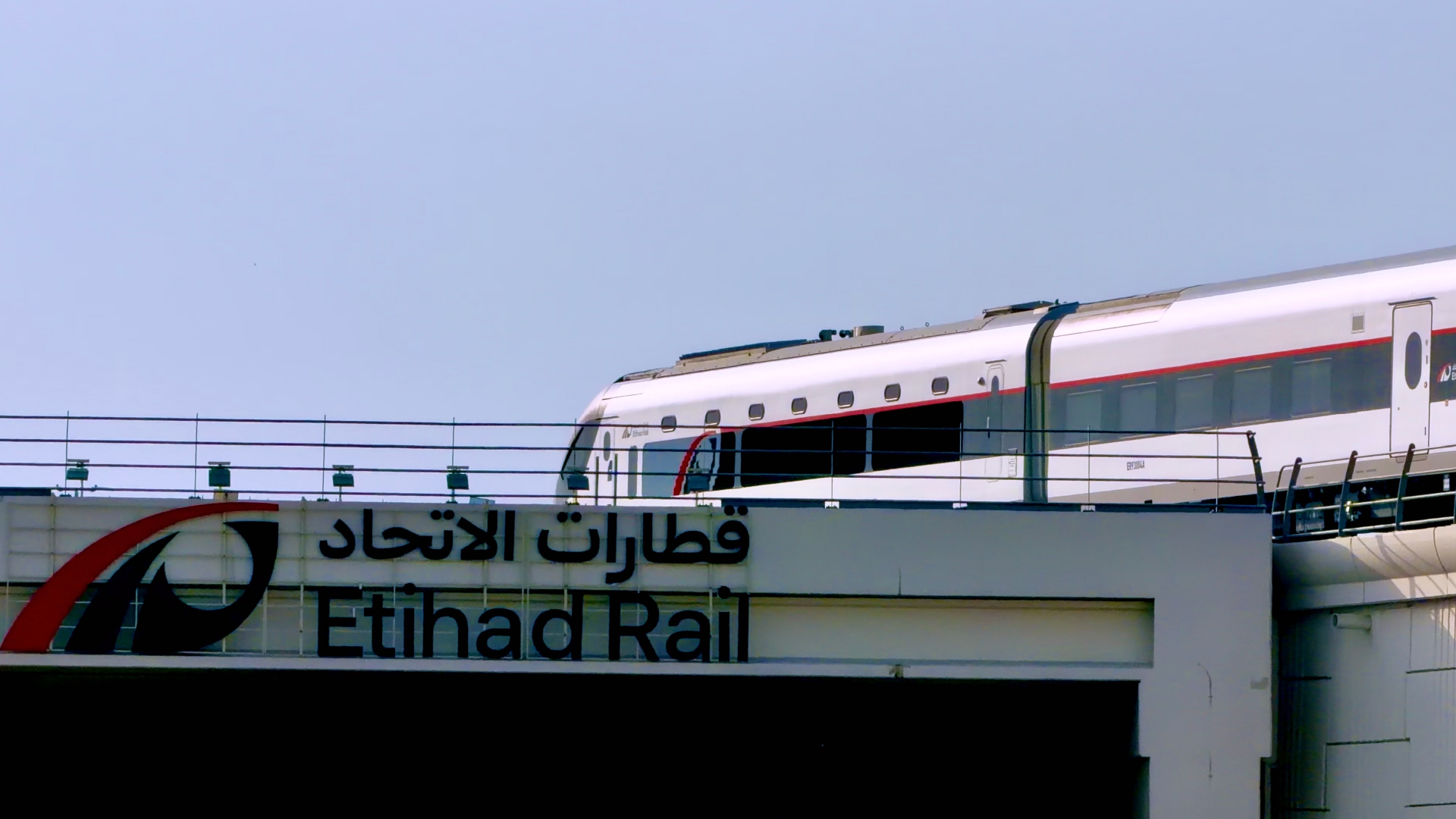
For decades, the UAE’s economic success has been built on connectivity. Its airports connect East and West. Its ports connect global supply chains. Its roads connect fast-growing cities, communities and industrial zones.
The arrival of Etihad Rail passenger services marks the next stage in that story: a national rail network that will not simply move people between emirates, but change how businesses think about time, talent, productivity and regional growth.
Beyond Steel and Concrete: Enablers of Economic Certainty
Infrastructure is often discussed in terms of concrete, steel and stations. But the real value of transport infrastructure is measured in what it enables. It enables a meeting that would otherwise be missed. It enables an employee to access a better job without relocating. It enables a tourist to visit a second emirate on the same day. It enables companies to recruit across a wider geography. It enables families, students, entrepreneurs and investors to move with greater certainty.
That certainty matters. In business, time is not only money; it is confidence. When travel times are predictable, companies can plan better. When journeys are comfortable, employees can work, think or rest en route. When cities are connected by reliable public transport, the economic map of a country starts to change.
Upgrading the Intercity Commute
The UAE already has one of the world’s most dynamic urban economies, but much of its intercity movement is still road-based. For many people, travelling between emirates means driving, using taxis, relying on company transport, or coordinating around congestion and parking. These options will not disappear, nor should they. But passenger rail introduces something different: a scheduled, high-capacity, congestion-free backbone that can sit alongside roads, buses, taxis, metro systems and future mobility services.
The productivity impact could be significant. A rail journey between major cities is not just a substitute for a car journey; it is a different type of time. A driver on a motorway cannot answer emails, prepare for a meeting, review documents or hold a focused call. A rail passenger can. For business travellers moving between Dubai, Abu Dhabi, Sharjah and Fujairah, this changes the economics of the working day. Travel time becomes usable time.
Expanding the Talent Pool and Connecting Specialized Hubs
For employers, the implications go further. Talent markets are shaped by commute tolerance. If a role requires a daily or frequent journey that is unreliable, expensive or tiring, the realistic talent pool shrinks. If that same journey becomes predictable and comfortable, the pool expands. Passenger rail can make it easier for businesses in one emirate to hire talent living in another. It can also support hybrid working patterns, regional office strategies and more flexible approaches to where people live and work.
This is especially relevant in a country where communities, business districts, free zones, ports, universities and industrial clusters are spread across multiple emirates. The UAE is not a single-centre economy. It is a network of specialised places: financial and professional services, logistics, manufacturing, education, tourism, energy, technology and creative industries. Rail strengthens the links between those specialisms.
Boosting SMEs and Redefining Tourism
The benefits will not be limited to large corporations. SMEs stand to gain from better access to customers, suppliers and staff. A British-owned company based in Dubai may find it easier to serve clients in Abu Dhabi. A consultancy in Abu Dhabi may attend meetings in Sharjah or Dubai without losing half a day to road travel. A hospitality business in Fujairah may attract more weekend visitors from Dubai. A university or training provider may draw students from a wider catchment area.
Passenger rail also has the potential to boost domestic tourism. The UAE’s tourism offer is often viewed through the lens of individual emirates, but rail encourages multi-emirate itineraries. Visitors could combine Dubai’s business and leisure attractions with Fujairah’s coastline, Sharjah’s cultural assets or Abu Dhabi’s museums and events more easily. For hotels, attractions, tour operators and destination marketers, that creates new opportunities to package the UAE as a connected national destination rather than a series of separate stops.
Optimising Major Events and Social Quality of Life
The same principle applies to major events. The UAE already hosts global conferences, exhibitions, sporting events and cultural festivals. Passenger rail can help distribute the economic impact of those events beyond the host city. Delegates attending an event in Dubai may stay, dine or meet clients elsewhere. Residents in other emirates may travel more easily to events without adding cars to the road network. Over time, this strengthens the country’s ability to host at scale while managing pressure on urban infrastructure.
There is also a social dimension. Better connectivity supports quality of life. It gives people more choice over where they live, work, study and spend their leisure time. It can reduce the strain of long-distance driving and make intercity travel more accessible for those who do not want to drive. For families, students and younger professionals, this matters. Economic productivity is not only about output per hour; it is also about reducing friction in daily life.
The Sustainability Agenda and Ecosystem Integration
The environmental case is equally important. The UAE has committed to long-term sustainability goals, and transport is a central part of that transition. Rail is not a silver bullet, but it can shift a proportion of intercity trips away from private cars and reduce the need for duplicative vehicle journeys. The greatest impact will come when rail is well integrated with first- and last-mile services: metro, buses, taxis, ride-hailing, walking routes, cycling infrastructure and employer shuttles. A railway station should not be the end of a journey; it should be the centre of a mobility ecosystem.
Opportunities for the Private Sector and UK-UAE Collaboration
That is where the private sector has a major role to play. Businesses should not wait until passenger rail is fully mature before thinking about how it affects them. Employers can start mapping staff travel patterns, client locations and inter-emirate meeting demand. Property developers can consider how rail access changes the attractiveness of communities and commercial space. Hospitality and tourism companies can design new products around rail-linked travel. Mobility operators can build complementary first- and last-mile services. Professional services firms can advise clients on the commercial implications of a more connected UAE.
For British businesses in particular, Etihad Rail should be seen as part of the wider UK-UAE opportunity. The UK has deep expertise in rail operations, station design, transport planning, mobility technology, passenger experience, engineering, safety, accessibility and public-private partnerships. As the UAE builds a new passenger rail culture, there will be opportunities not only in the railway itself, but in the ecosystem around it: retail, real estate, tourism, digital ticketing, customer service, data, wayfinding, training and integrated mobility.
A New Platform for National Productivity
The countries that gain most from transport investment are not always those that simply build infrastructure; they are those that adapt fastest around it. Etihad Rail will create new patterns of movement. The question for businesses is whether they are ready to respond.
Will companies recruit differently? Will meetings be planned differently? Will tourism packages be redesigned? Will offices, hotels and communities near stations become more attractive? Will employees expect rail-connected working patterns? Will clients expect easier access across emirates?
The arrival of passenger rail is not just a transport milestone. It is a productivity platform. It has the potential to make the UAE feel smaller in distance, larger in opportunity, and more integrated as a national economy.
For a country that has already mastered global connectivity through aviation, ports and logistics, Etihad Rail brings the next competitive advantage closer to home: the ability to connect people, businesses and communities across the Emirates with speed, reliability and purpose.
The tracks may be fixed, but the opportunities they create will be anything but.
Image Credits: Me.Karim1983 / Shutterstock
You’ve been added to the waitlist. You'll receive a confirmation email soon, along with regular updates and the latest news. Stay tuned!


How can i help you today?

